How Visual Paradigm’s AI Tools Streamline Class Diagram
15 Dec
Visual Paradigm offers powerful AI-powered tools that dramatically streamline the process of creating UML class diagrams, turning what used to be a time-consuming manual task into a fast, intuitive workflow. These tools are particularly effective for systems like a Hotel Reservation System, where you need to quickly model entities such as Guest, Room, Reservation, Payment, and their relationships.
By leveraging AI, Visual Paradigm eliminates the “blank canvas” problem, reduces errors, ensures best practices, and allows designers—whether beginners, students, or professionals—to focus on refining design decisions rather than tedious drawing and layout.
Key Visual Paradigm AI Features for Streamlining Class Diagrams
Visual Paradigm provides multiple AI-assisted approaches:
- AI Diagram Generator (Instant Text-to-Diagram)
- Enter a simple prompt like “Hotel Reservation System” or a detailed description.
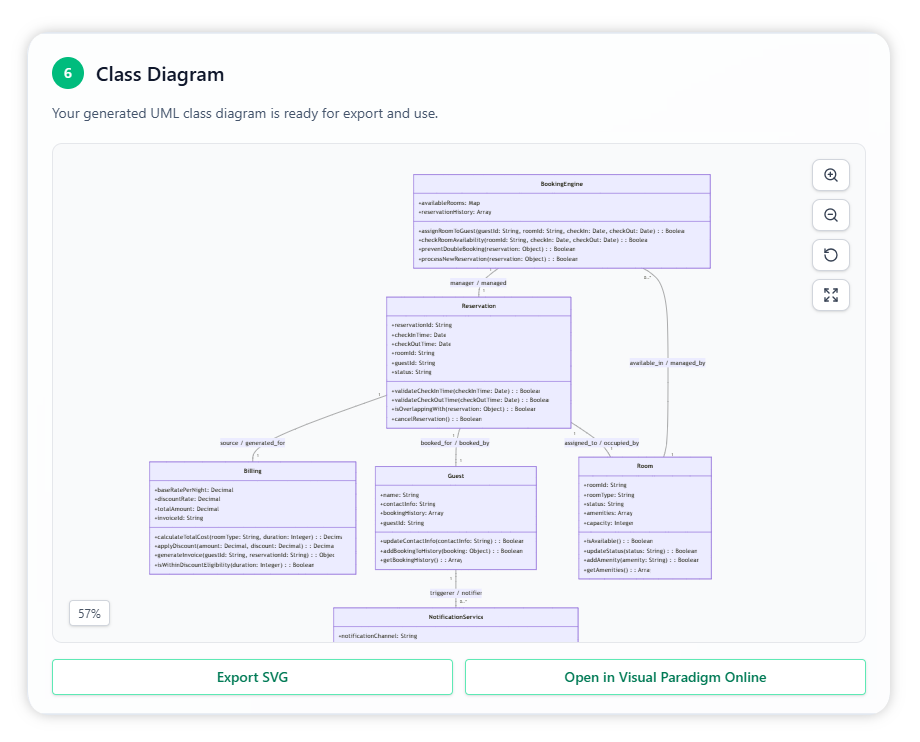
- The AI instantly generates a complete, professionally laid-out class diagram with classes, attributes, operations, and relationships.
- Available for Class Diagrams, Use Case, Sequence, and more.
- Opens directly in the editable Visual Paradigm editor for further customization.
- AI-Assisted UML Class Diagram Generator (Guided Step-by-Step Wizard)
- A structured, interactive wizard that breaks down the process:
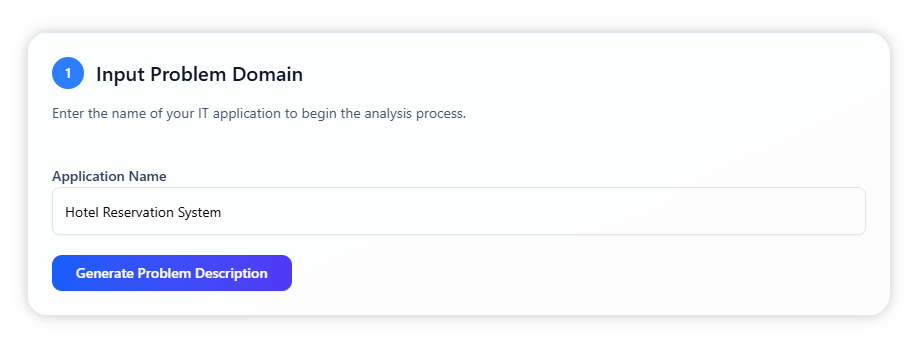
- Start with a high-level idea (e.g., “Hotel booking and management system”).
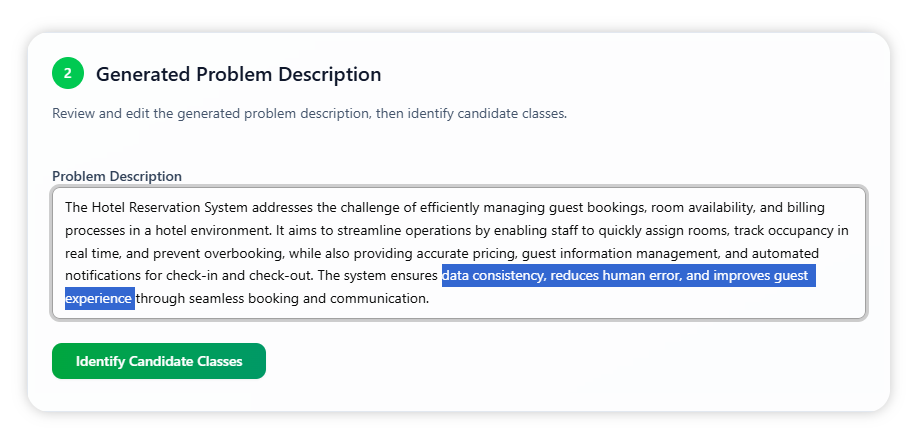
- AI generates or expands a detailed problem scope.
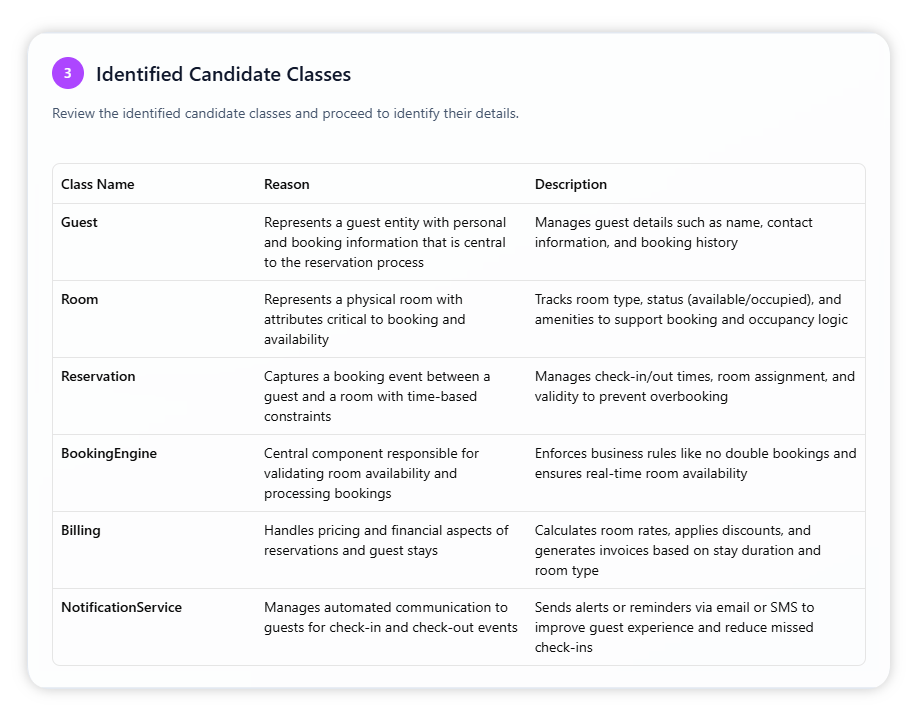
- Identify candidate classes (e.g., Guest, Room, Reservation, Billing).
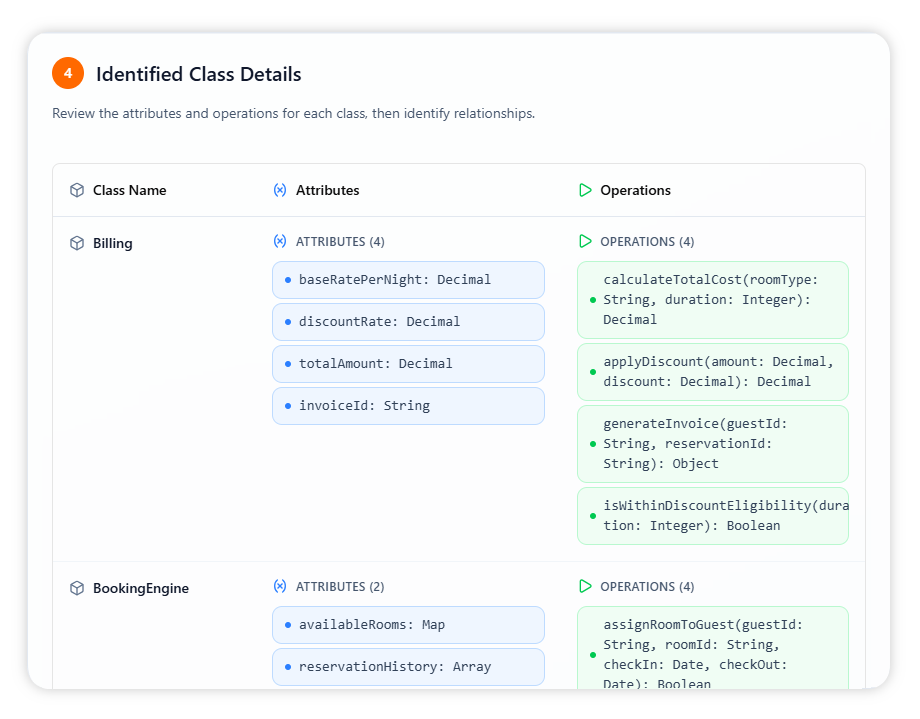
- Suggest attributes and operations for each class.
- Detect and propose relationships (association, aggregation, inheritance) with multiplicities.
- Review, validate against UML best practices, and get AI-generated notes or critiques.
- Render as PlantUML code, view SVG preview, and export.
- Ideal for educational purposes or when you want control over each step.
- A structured, interactive wizard that breaks down the process:
- AI Chatbot for Diagramming
- Conversational interface: Describe changes in natural language (e.g., “Add a Payment class that inherits from Transaction and associates with Reservation”).
- AI refines the diagram, suggests improvements, and can generate documentation or analysis reports.
- AI-Enabled Textual Analysis Tool
- Paste a problem description; AI automatically extracts classes, attributes, operations, and relationships to build the diagram.
How These Tools Streamline the Workflow for a Hotel Reservation System
Traditional manual creation involves:
- Brainstorming classes → Drawing boxes → Adding details → Connecting relationships → Aligning layout → Fixing errors.
This can take hours, especially for complex systems.
With Visual Paradigm AI:
- Time Savings: From hours to seconds/minutes for the initial diagram.
- Overcome Blank Canvas: Start instantly from a prompt like “Create a class diagram for a hotel reservation system including guests, rooms, bookings, payments, and staff.”
- Accuracy and Best Practices: AI ensures proper UML notation, suggests realistic attributes/operations (e.g., Room: status, price; Reservation: checkInDate, totalCost), and detects issues like missing multiplicities.
- Iteration Speed: Quickly regenerate or refine—perfect for prototyping or agile development.
- Collaboration and Export: Diagrams are editable online/offline, exportable as SVG/PNG/PlantUML, and shareable.
- Learning Aid: AI explanations and critiques help users understand design rationale.
Benefits and User Impact
- Productivity Boost: Focus on architecture and requirements, not drawing.
- Accessibility: Great for non-experts; no deep UML knowledge needed initially.
- Consistency: AI enforces standards, reducing rework.
- Scalability: Handles simple to enterprise-level systems seamlessly.
Visual Paradigm’s AI tools transform class diagram creation from a bottleneck into an efficient, enjoyable step in software design. For a Hotel Reservation System, you can go from idea to a polished, analyzable diagram in minutes—ready for code generation, team review, or documentation.
Try it yourself at visual-paradigm.com or their online platform—many features are available in free/community editions!